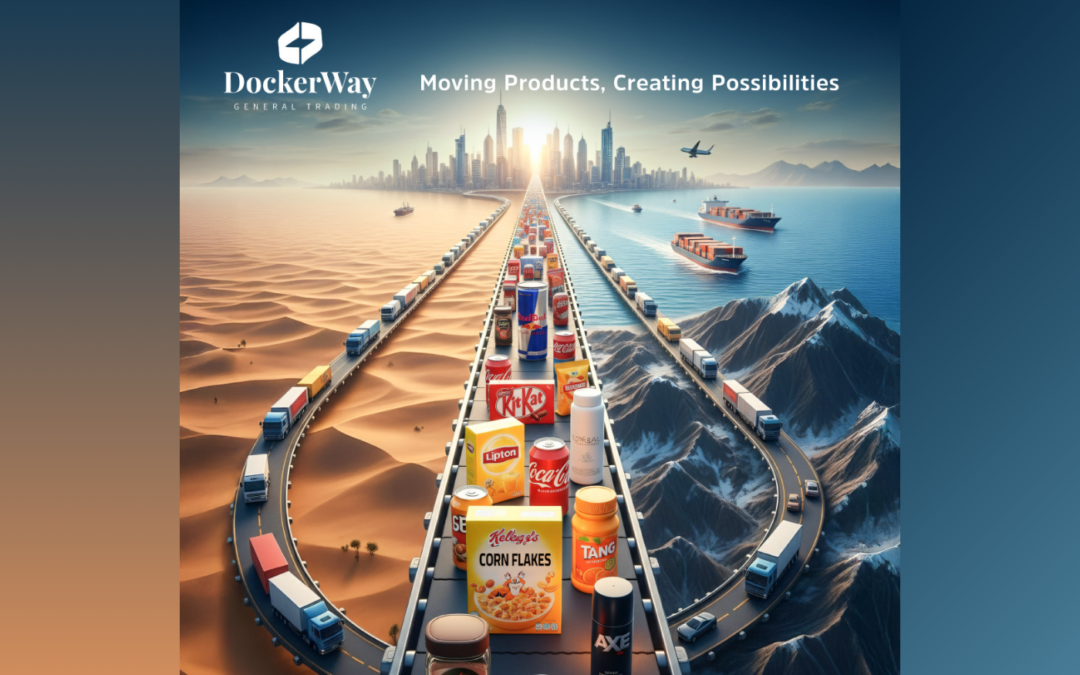
In the fast-paced world of global FMCG trading, businesses are constantly seeking ways to optimize supply chains and reduce costs. Cross-trading in FMCG—facilitating trades between third-party countries without direct inventory handling—has emerged as a game-changer for FMCG import export operations. Based in Dubai, Dockerway leverages cross-trading to deliver authentic FMCG products at unbeatable prices, connecting suppliers and buyers across the MENA FMCG market. As we move into 2026, with UAE FMCG trading thriving under initiatives like Vision 2030 trade in KSA, understanding cross-trading is essential for SMEs in UAE business. This guide explores its benefits, implementation, and how Dockerway makes it seamless. What is Cross-Trading in FMCG?
Cross-trading involves arranging shipments directly from a seller in one country to a buyer in another, bypassing the trader’s warehouse. For FMCG trading Dubai, this means sourcing food products, beverages, or confectionery from Europe and shipping them straight to Egypt or KSA without intermediate storage.
Unlocking Efficiency with Cross-Trading in FMCG Import Export: Insights for Dubai and MENA Markets